Bingo Dice
- 4.9
- Rating
- 1.00M
- Installs
- Free
- Price
 Analysis by App-foxy
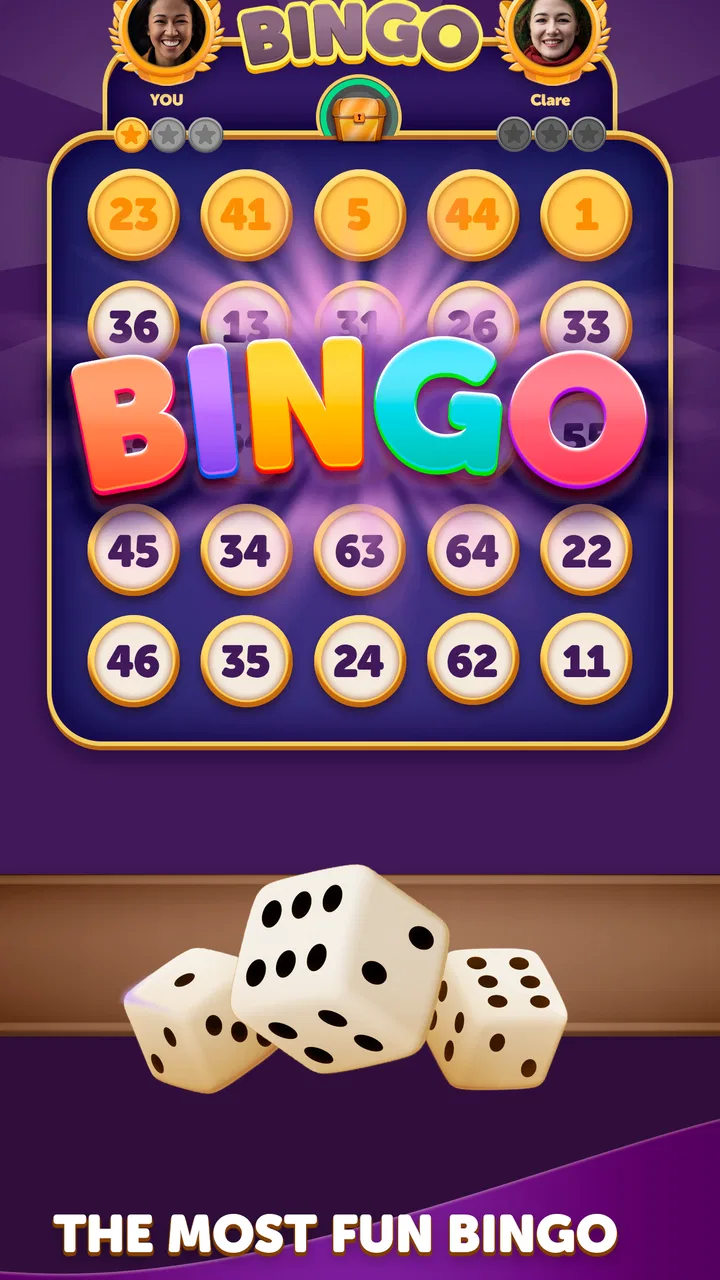
I went into Bingo Dice expecting a familiar bingo-style pastime, but the first few rounds quickly showed me that this is better understood as a compact board game with a competitive edge. The basic idea is easy to grasp, yet the decisions matter because each move is made with another player in mind. That combination makes it approachable for someone trying the genre for the first time while still giving experienced board-game players something to think about.
FunCraft Games has positioned the game around strategic player-versus-player matches rather than a purely relaxed number-marking experience. It is free to download, rated for Everyone, and listed in the Board category. The store summary is brief, but my experience is that the appeal comes from the tension between luck and choice: the dice create uncertainty, while the way I react to the board determines whether a promising turn becomes a real advantage.
What to expect before your first match
The most important expectation to set is that this is not simply traditional bingo played at a faster pace. You are not only waiting for favorable results. You are also reading the state of the board, deciding what deserves attention, and trying to make choices that leave your opponent with fewer comfortable options. That makes every turn feel more deliberate than the usual casual bingo app.
You May Also Like

 Blood Strike: 2.5 Anniversary
Blood Strike’s Loadouts Turn Every Drop Into a Tactical Gamble
A close look at Blood Strike’s custom loadouts: how fast access to signature weapons reshapes its battle royale rhythm, rewards preparation, and narrows the gap between fights.

 Pandora - Music & Podcasts
Pandora’s Music Is Easy to Start, but Harder to Recover
Pandora’s strength is its low-effort path from a seed to a station. Its weak spot is how much confidence it asks you to place in connection, setup, and quiet recovery.

 8 Ball Pool
 Is Built on Rivalries, Rematches, and Routine
A close look at the rivalries, rematches, shared routines, and unanswered safety questions that turn a quick pool match into a persistent mobile community.

 Samsung Music
’s Quiet Strength Is Playing What You Already Own
Its reach comes less from spectacle than from dependable access to a personal library. That simplicity is both the app’s strongest retention engine and its ceiling.

 AccuWeather: Weather Radar
AccuWeather Review: A Quick, Clear Forecast for Everyday Decisions
For everyday plans, the best forecast is the one you can understand quickly. AccuWeather makes rain timing, radar, and local conditions easy to act on, with a few trade-offs.

 Hill Climb Racing
Why Hill Climb Racing Still Turns Crashes Into One More Run
A tiny car, a bumpy hill and one more upgrade: Hill Climb Racing keeps resurfacing because its simple chaos makes every near-miss feel personal.
More From Our News Desk



The format works especially well when I have only a short break. A match can be approached as a quick mental reset, but it still asks me to stay alert. I would not describe it as a background game for playing while watching something else, because the value is in noticing how one decision affects the next. If you enjoy board games where a small advantage can grow through careful play, the competitive structure should feel natural.
The game has already attracted a sizeable audience, with over 500 thousand installs and an average rating of 4.9 from around 30 thousand ratings. Those figures suggest that the central loop is connecting with many players, although they should not be mistaken for a guarantee that every player will enjoy the same pace or level of competition. People looking for completely passive luck may prefer a simpler bingo alternative.
Its age rating of Everyone is useful for families and younger players, but the strategic layer means that a child may still benefit from someone explaining the purpose of each decision. The rules are not intimidating, yet understanding why one move is stronger than another takes a little practice. I found that the game became more satisfying once I stopped treating each roll as an isolated event.
There is also a practical device consideration. The listed minimum operating system is Android 7.0, so the game is accessible on a broad range of Android devices. The current version is 1.1.24452. I would still keep the app updated where possible, especially for a competitive game, because a current build is the sensible starting point when matches depend on smooth interaction and consistent behavior.
The first setup is simple, but do not rush through it
After installing, I recommend taking a moment to look at the entire play area before trying to make the quickest possible move. New players often focus on the most obvious available result and miss the wider shape of the board. The useful question is not only “what can I mark now?” but also “which choice gives me a better route on the next turn?”
That small change in attention makes the opening less confusing. I found it helpful to identify two possible goals rather than committing emotionally to one immediately. If the first result supports one route, I can follow it; if the opponent begins blocking that direction, I can switch without feeling that the match is already lost. This flexible approach is more reliable than chasing a single pattern from the beginning.
For a first-time user, the best setup routine is to play the opening round as a learning match. Do not worry about using every opportunity perfectly. Instead, notice which parts of the board become valuable after a few turns and watch how the opponent’s progress changes the value of your own options. That observation is more useful than memorizing a fixed sequence, because the competitive board will not develop in exactly the same way each time.
One of the less obvious trade-offs is that fast play can feel rewarding but may hide mistakes. I initially wanted to tap as soon as I saw a useful result. Slowing down for a few seconds helped me notice when a tempting move created a better opening for the other side. For beginners, that pause is not wasted time; it is the easiest way to learn the game’s strategic rhythm.
How to reach a meaningful first success
A meaningful first success does not have to mean dominating the entire match. For me, it was recognizing a developing opportunity early enough to protect it while still keeping a backup plan. That is the moment when the game stops feeling like a sequence of random outcomes and starts feeling like a board game in which my choices have weight.
My practical advice is to begin with the clearest available route, then reassess after every important result. Look for moves that serve more than one purpose: progress toward your own objective while limiting a useful response for the opponent. A move with a modest immediate benefit can be stronger than a flashy move that leaves the rest of your board disconnected.
Another helpful habit is to avoid spending all your attention on your own side. In a solo puzzle, optimizing your position is enough. Here, the opponent’s progress is part of the puzzle. Before confirming a move, I try to ask whether it gives the other player an easy follow-up. That single check has prevented more avoidable losses than trying to predict every possible future turn.
When I play with a friend nearby, I find that explaining my intention out loud is surprisingly useful. Saying “I am choosing this because it keeps two routes open” makes the logic easier to see, and it also exposes weak reasoning. This makes the game suitable for a casual family session where the goal is not only winning but learning how competitive board decisions work.
The first win can still depend on luck, and that is part of the design rather than a flaw by itself. A careful player can make a strong position and still receive an awkward result. The important distinction is whether the game gives me meaningful choices in response. In my experience, it usually does, which keeps an unlucky turn from automatically making the rest of the match pointless.
Where new players commonly get confused
The biggest source of confusion is treating the dice result as the whole decision. The result limits what is immediately available, but the board determines what that result means. A number or symbol that looks useful in isolation may be less valuable if it completes a route the opponent can exploit or if it pushes you toward a narrow plan.
Another common mistake is assuming that the first attractive pattern should remain the main target. Competitive board games often reward changing direction, and this one is no different in that respect. If the opponent has made one route difficult, I would rather preserve a second possibility than repeatedly force a plan that has become unlikely. Adaptation is more important than stubbornness.
Players may also wonder whether they should prioritize their own progress or blocking the opponent. I do not think either rule works in every situation. Early in a match, building a flexible position is usually more useful than reacting to every small threat. Later, when the opponent is close to completing something valuable, prevention can become the better move even if it slows your own progress.
This creates a subtle learning curve. The controls and general idea are accessible, but good decisions depend on timing. A defensive move made too early can waste an opportunity; the same move made one turn later may be essential. That is why I would give the game a few matches before deciding whether it feels strategic enough for you.
There is also a difference between playing for fun and playing to improve. In a relaxed session, I may accept a risky move simply because it creates a more exciting board. In a serious match, I prefer keeping more than one route available. Neither style is wrong, but frustration can come from using a casual approach while expecting consistently competitive results.
Turning short breaks into useful practice
A realistic everyday scenario is a commute, a lunch break, or a few quiet minutes before an appointment. I can open a match, focus on the board, and leave with a small mental challenge rather than a long campaign to manage. The game fits that kind of session because its appeal is concentrated in individual decisions instead of a large collection of systems that require extensive preparation.
For short sessions, I suggest choosing one learning goal per match. In one game, I might focus on keeping two routes open. In another, I might pay attention to when blocking becomes worthwhile. This makes losses more informative and prevents the experience from becoming a simple cycle of winning or losing without understanding why.
A less obvious use case is introducing strategic thinking to someone who does not normally play board games. The bingo connection makes the premise less intimidating, while the player-versus-player structure creates a gentle lesson in probability, risk, and timing. I would not present it as a formal educational tool, but it can naturally encourage those habits during a family or friend session.
On the other hand, I would skip it if your ideal game is a completely predictable puzzle with no luck involved. You can make sensible choices and still face an unfavorable outcome. Players who dislike that uncertainty may be happier with a deterministic strategy game. I would also choose a traditional bingo app instead if the main goal is a calm, familiar activity without direct competition.
How the free model affects the experience
The game is free, which makes it easy to try without committing money at the start. It includes in-app purchases ranging from $0.99 to $49.99 per item. That is worth keeping in mind before settling into regular play, particularly if you are reviewing optional purchases on a shared family device.
My advice is to treat the free version as the test of whether the core matches suit you. Do not buy anything simply because you lost a close round or want to speed up your progress. The strategic value comes from learning the board and responding well, so spending should not replace the process of understanding how the game works.
This is also where the game may compare differently with physical bingo. A tabletop set has a one-time social presence and no digital purchase prompts, while this app offers convenience and immediate matchmaking-style competition. The choice depends on what you want: a portable competitive activity favors Bingo Dice, whereas a relaxed group gathering may still be better served by physical cards and shared conversation.
What changes after the first few matches
Once the basic flow becomes familiar, I start paying more attention to tempo. Some turns are about building quietly, while others demand an immediate response. Recognizing that difference is more valuable than trying to play every turn with the same level of aggression. A measured opening can leave me better prepared for the moment when the board suddenly becomes decisive.
I also recommend reviewing losses without blaming the dice immediately. Sometimes the result truly leaves few options, but other times the difficult turn was created earlier by choosing a route that was too narrow. Looking back one or two moves often reveals the real lesson. This is a useful habit because it turns the game’s luck into context rather than an excuse for every outcome.
For players who enjoy friendly rivalry, the strongest long-term appeal is the conversation around decisions. A close match gives both people something to discuss: whether a defensive move came too early, whether a risky route was justified, or whether a safer option would have been wiser. That social layer is more compelling than simply collecting wins.
Still, the game’s compact design may feel limited to people who want extensive progression, deep customization, or a large single-player campaign. I would not install it expecting a sprawling board-game platform. Its strength is focus. It gives me a concise competitive format, and that focus is either a benefit or a limitation depending on how much variety I need.
My recommendation for a first-time player
If you are new to the game, start by observing the board before acting, keep at least one alternative route in mind, and check the opponent’s immediate possibilities before confirming a move. Those three habits make the opening matches less confusing and help you reach the first genuinely satisfying success sooner.
After that, decide what kind of player you are becoming. If you enjoy adapting to uncertain results and making small tactical choices, the game has enough tension to keep short sessions interesting. If you want pure bingo familiarity, no competitive pressure, or complete control over outcomes, a conventional alternative will probably suit you better.
For me, FunCraft Games has found a good middle ground between recognizable bingo ideas and board-game strategy. The Everyone rating and free entry make it approachable, while the player-versus-player decisions give it more substance than a passive number caller. The 4.9 average rating reflects strong reception, but the real test is personal: play several matches, learn from one loss, and see whether the decisions remain enjoyable when luck does not go your way.
My final view is positive, with one clear condition: this is best for players who want bingo with decisions, not bingo on autopilot. It is easy to begin, rewarding when I think ahead, and convenient for short competitive sessions. I would recommend giving it a fair trial, especially with a friend or family member, while keeping purchases optional and remembering that the most satisfying progress comes from reading the board better rather than simply playing faster.
FAQs for Bingo Dice
01What is Bingo Dice and how does it work?
Bingo Dice is a unique blend of traditional bingo and dice games, providing a fresh gaming experience. Players roll dice to generate numbers, which they then mark on their bingo cards. The objective is to complete specific patterns to win. This innovative twist adds an exciting layer of strategy and chance to the classic game.
02Is Bingo Dice free to play or are there in-app purchases?
Bingo Dice is free to download and play, but it offers in-app purchases for enhanced features. Players can buy additional dice rolls, power-ups, and exclusive bingo cards. While the game can be enjoyed without spending money, these purchases can enhance gameplay and provide quicker progression.
03What are the main features of Bingo Dice?
Bingo Dice offers several engaging features, including multiple game modes, daily challenges, and multiplayer options. Players can enjoy themed bingo rooms and special events. The app also provides leaderboards and social media integration, allowing players to compete with friends and share achievements.
04Is an internet connection required to play Bingo Dice?
Yes, an internet connection is necessary to play Bingo Dice. The game requires connectivity to access multiplayer features, updates, and events. However, some basic single-player modes may be available offline, although they may not offer the full experience or rewards of the online game.
05What devices are compatible with Bingo Dice?
Bingo Dice is compatible with both Android and iOS devices. It supports a wide range of smartphones and tablets running recent operating system versions. To ensure optimal performance, it’s recommended to use devices with updated software and adequate hardware specifications for gaming.
Pros
- Easy to learn and play quickly.
- Colorful and engaging graphics.
- Multiplayer mode available.
- Regular updates with new features.
- Minimal ads for a free app.
Cons
- Limited offline gameplay.
- Occasional lag in multiplayer.
- In-app purchases can be pricey.
- Needs more diverse game modes.
- Soundtrack can become repetitive.

Bingo Dice
Gallery